

The world of cancer detection has seen significant advancements in recent years, offering new hope for individuals at risk. Early detection remains one of the most powerful tools in the fight against cancer, as it allows for the possibility of more effective treatments and higher survival rates. In 2025, experts in the medical and scientific communities continue to emphasize the critical role that early detection plays in improving outcomes for cancer patients. With ongoing research and innovation, several methods are emerging that could revolutionize the way we detect cancer before it becomes life-threatening. This article explores the latest insights from experts and highlights promising early cancer detection techniques that are worth considering this year.
The Importance of Early Cancer Detection
Cancer, in all its forms, is often most treatable when detected in its early stages. The American Cancer Society emphasizes that, for many types of cancer, early detection can significantly reduce the risk of mortality. For instance, breast cancer, cervical cancer, and colorectal cancer all have well-established screening protocols that can identify abnormalities long before the onset of serious symptoms. Early detection means that treatment can be administered before the cancer has spread, potentially leading to less aggressive therapies and better outcomes. In 2025, the push to detect cancer at its earliest possible stage continues to gain momentum, thanks to improved technologies, more sophisticated screening methods, and a deeper understanding of cancer biology.
1. Liquid Biopsy: A New Frontier in Cancer Detection
One of the most groundbreaking developments in cancer detection is the advent of liquid biopsy. Unlike traditional biopsies that require tissue samples from the tumor, a liquid biopsy involves analyzing a blood sample to detect traces of tumor DNA, RNA, or other cancer-related biomarkers circulating in the bloodstream. According to Dr. Daniel Hayes, a leading oncologist at the University of Michigan, liquid biopsy represents a non-invasive, highly sensitive approach that could change how cancers are diagnosed. “This technique allows us to detect genetic mutations associated with cancer even before the cancer has manifested in visible form,” says Dr. Hayes. Liquid biopsy is already being used for lung, breast, prostate, and colon cancers, and research is ongoing to expand its applications. Experts suggest that liquid biopsy could eventually become a routine part of cancer screening, offering an early, simple test with the potential to identify multiple cancer types simultaneously.
2. Artificial Intelligence (AI) in Imaging: Enhancing Accuracy in Detection
Another area of significant progress is the integration of artificial intelligence (AI) into cancer screening. AI is being employed to analyze medical imaging, such as mammograms, CT scans, and MRIs, with extraordinary precision. Dr. Lucy Li, a radiologist and AI researcher at Stanford University, explains that AI algorithms can be trained to detect subtle patterns in imaging that may be too difficult for the human eye to discern. “AI can help identify small tumors or early cellular changes that might go unnoticed in traditional screenings,” Dr. Li says. In breast cancer, for example, AI-driven mammograms are already proving to be more accurate than traditional methods, detecting tumors at earlier stages with fewer false positives. Experts believe that as AI technology improves, it will play an increasingly vital role in early cancer detection across a range of cancers, reducing diagnostic errors and enhancing patient outcomes.
3. Mammography and 3D Imaging: Advancements in Breast Cancer Screening
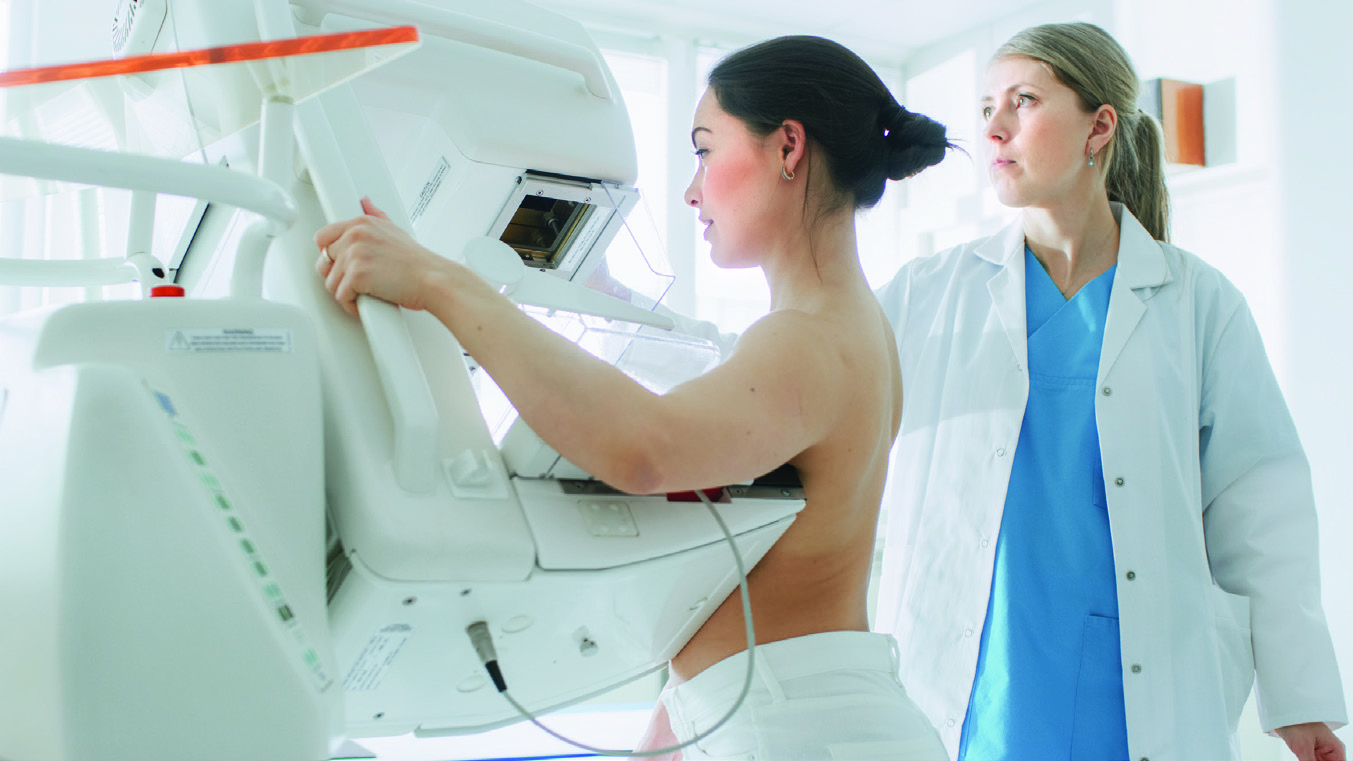
For breast cancer, mammography remains the gold standard in early detection. However, recent advancements in 3D mammography, or tomosynthesis, have taken this screening method to new heights. Dr. Carla H. Pugh, a researcher at the University of California, highlights that 3D mammography provides more detailed images of breast tissue than traditional 2D mammograms, improving detection rates and reducing false positives. “With 3D mammography, we can see the breast tissue in layers, allowing us to better identify tumors that may be hidden in dense tissue,” says Dr. Pugh. This improvement is particularly important for women with dense breast tissue, who are at a higher risk of having cancers go undetected with standard 2D mammography. Experts recommend that women, especially those with risk factors like age and family history, consider adopting 3D mammography as part of their routine screenings this year.
4. Pap Smear and HPV Testing: Early Detection of Cervical Cancer
Cervical cancer is one of the few cancers for which a routine screening test has been in widespread use for decades. The Pap smear has long been the gold standard for cervical cancer detection, but today, testing for the human papillomavirus (HPV) is equally important. According to Dr. Alexandra McCaffrey, an obstetrician and gynecologist at Johns Hopkins University, the combination of HPV testing with Pap smears offers a more comprehensive and accurate method of detecting cervical cancer risks. “HPV is the primary cause of cervical cancer, and testing for the virus allows us to detect high-risk strains that may lead to abnormal cell changes before they develop into cancer,” Dr. McCaffrey explains. For women over the age of 30, co-testing with Pap smears and HPV tests is now the preferred method. This combined approach improves the accuracy of screenings and helps identify pre-cancerous changes at an earlier stage, making it possible to intervene before cancer develops.
5. Colonoscopy: Still the Gold Standard for Colorectal Cancer Detection
Colorectal cancer is another disease that has seen significant advancements in screening over the years, with colonoscopy being the gold standard. A colonoscopy allows doctors to directly visualize the inside of the colon and remove any polyps that could potentially turn into cancer. Dr. Michael Winawer, a gastroenterologist and expert on colorectal cancer prevention, argues that colonoscopy is still the most effective screening tool. “By detecting and removing polyps early, we can prevent many colorectal cancers from developing,” he says. While there are other non-invasive screening methods, such as stool tests and CT colonography, colonoscopy remains the most reliable method for identifying both cancerous and pre-cancerous growths in the colon. Experts recommend that individuals begin screening at age 45, especially those with a family history of colorectal cancer.
6. Low-Dose CT Scans for Lung Cancer: Screening for High-Risk Populations
Lung cancer, often diagnosed at later stages, has historically been difficult to detect early. However, low-dose computed tomography (CT) scans are making significant strides in detecting lung cancer in high-risk individuals, particularly those with a history of heavy smoking. According to Dr. Edward Pattison, an oncologist specializing in lung cancer at Memorial Sloan Kettering Cancer Center, low-dose CT scans have been shown to reduce lung cancer mortality by up to 20% in high-risk populations. “This technique allows us to identify small tumors in the lungs that would not be visible on a chest X-ray,” Dr. Pattison explains. The U.S. Preventive Services Task Force now recommends annual low-dose CT screening for people aged 50 to 80 who have a history of heavy smoking. As research continues, low-dose CT scans may become an even more widespread tool in early lung cancer detection.
7. Blood Tests for Circulating Tumor DNA (ctDNA): A Promising Frontier
Circulating tumor DNA (ctDNA) is another innovative technique in the world of early cancer detection. This method analyzes blood for DNA fragments released by tumors into the bloodstream. Dr. Jennifer Gannon, a cancer researcher at the University of California, believes that ctDNA tests hold great promise for detecting cancer at its earliest stages, sometimes even before visible tumors form. “By tracking the genetic material shed by tumors, we can identify potential cancers across multiple sites in the body,” Dr. Gannon says. Although ctDNA testing is still in the research phase for many cancers, its potential to become a routine part of cancer screening is considerable. Experts are optimistic that, with continued validation, ctDNA could revolutionize cancer detection, providing a simple blood test for a wide range of cancers.
Conclusion
As we move further into 2025, experts agree that early cancer detection is becoming increasingly precise, personalized, and accessible. From liquid biopsies and AI-enhanced imaging to low-dose CT scans and blood tests for ctDNA, the future of cancer detection looks promising. Each of these methods represents an exciting breakthrough in its field, offering new hope for earlier, more accurate diagnoses. With early detection being one of the most critical factors in improving cancer survival rates, it is clear that this year marks an important moment in the fight against cancer. As these technologies evolve, individuals at risk for cancer should stay informed and consider integrating these cutting-edge detection methods into their health routine for a better chance at catching cancer early when it is most treatable.